Surveillance and Security Systems Icons Review
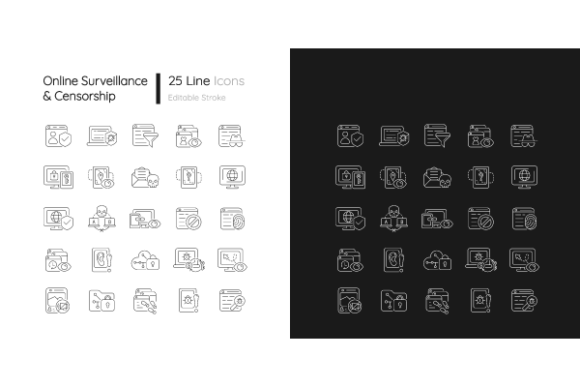
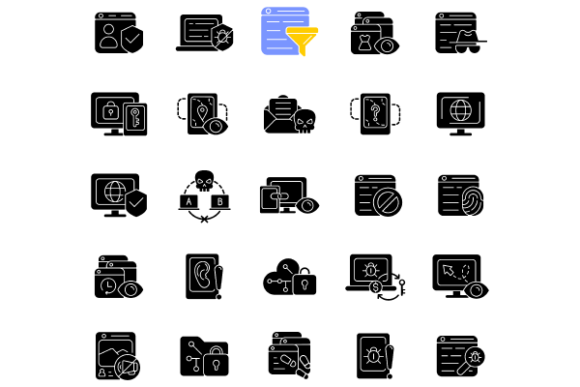
As an embroidery designer who has digitized and stitched countless technical graphics, I approach icon sets with a healthy dose of skepticism. Vector art looks crisp on a screen, but translating thin line contour symbols into thread is a different challenge entirely. When evaluating this Surveillance and Security Systems Icons collection for real-world application, my primary focus is whether these graphics can survive the transition from digital asset to tangible embroidered patch or apparel detail without losing their professional integrity.
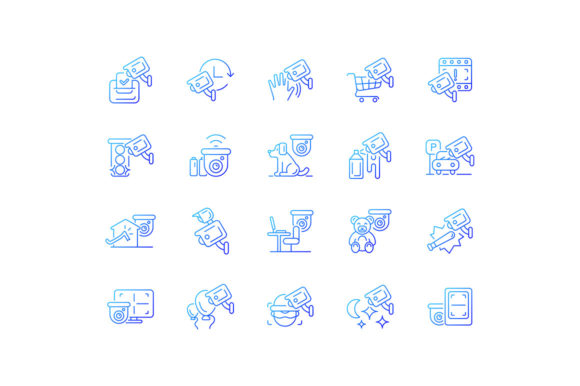
The first impression of this set is clean and utilitarian. The gradient linear style suggests a modern, tech-forward aesthetic that appeals to security firms, smart home installers, and IT service providers. However, for those of us running a craft business or managing commercial embroidery projects, the "gradient" aspect requires immediate scrutiny. In machine embroidery design, true gradients are impossible; we simulate them through thread color blending or density variations. If this vector set relies heavily on smooth color transitions, you must verify if the included embroidery file has already been digitized with stitch-aware shading or if you will need to re-digitize the artwork to achieve a similar effect using satin stitch or fill stitch techniques.
Real-World Application: Staff Apparel and Branding
I recently consulted on a project for a local security firm needing branded polo shirts and caps for their installation technicians. This scenario perfectly illustrates where Surveillance and Security Systems Icons shine and where they demand caution. We selected a CCTV camera icon and a "24/7 protection" shield symbol from the bundle to test on a mid-weight pique polo.
The result was largely successful because the icons utilize a thin line contour style. On the polo chest placement, the running stitch outlines remained distinct and did not sink into the fabric texture. This is crucial for custom apparel where clarity equals professionalism. A muddy, indistinct security camera logo undermines the very concept of vigilance and precision that the client sells. For the cap embroidery, however, we had to adjust the hoop size and stabilize aggressively. Curved surfaces distort linear vectors easily. While the isolated vector outline illustrations looked perfect flat, stitching them on a structured cap required reducing the stitch density slightly to prevent puckering along the curved brim seam.
This set is ideal for creating cohesive merchandise for small shop products or Etsy listings targeting niche B2B buyers. An embroidered patch featuring these sleek security symbols adds significant perceived value to a uniform package compared to a standard printed logo. For handmade product sellers, offering personalized gifts like keychains or tote bag designs with these icons can tap into the growing market for trade-specific gear.
Navigating Fabric Limitations and Stitch Integrity
While the visual personality of these icons is versatile, their performance varies drastically across different substrates. As a reviewer, I must emphasize that thin line contour symbols are unforgiving on certain materials. If you plan to use this machine embroidery design on baby clothes or stretchy knits, proceed with extreme caution. The linear nature of these graphics means there is little internal support structure within the design itself. On unstable fabrics, even with proper stabilizer, the lines can wander or gap.
For baby embroidery or items requiring frequent washing, I recommend testing the design on scrap fabric first. Check whether the running stitch is secured with adequate tie-offs at the corners. Security icons often feature sharp angles and geometric connections; these are high-stress points during laundering. If the stitch count is too low or the tension is off, the icon will unravel after three wash cycles, ruining both the finished product and your reputation as a maker.
Dark fabrics present another hurdle. Thin white or light-colored lines on navy or black garments offer excellent contrast, which is great for visibility. However, if the original vector set includes subtle gradient details in darker tones, those nuances will vanish completely on dark backgrounds. Always test in black and white mockups before committing thread colors. You may need to simplify the design assets, removing gradient elements entirely and relying solely on strong outline definition to maintain recognition on dark custom apparel.
Professional Value and Commercial Considerations
Beyond the technical stitching aspects, we must consider the commercial viability of using Surveillance and Security Systems Icons. For Etsy sellers and creative entrepreneurs, these graphics bridge the gap between generic clip art and bespoke branding. They communicate authority and technical competence. When used on a printable mockup for a digital product listing, they look sharp. But when delivered as a physical embroidered patch or sweatshirt embroidery sample, they validate the quality of your service.
However, licensing is non-negotiable. Before selling any finished product or digital embroidery file derived from this bundle, confirm the license terms explicitly. Does the provider allow for commercial embroidery on unlimited units? Can you sell the digitized files themselves, or only the physical goods? Many "isolated vector outline illustrations collection" products restrict resale of the digital assets while permitting physical merchandise. Protecting your craft business starts with respecting intellectual property rights.
Furthermore, consider the end-user's perspective. A security company buying embroidered patches needs assurance that the icon matches their existing brand identity. These icons serve as excellent foundational design assets, but they may require customization. Be prepared to adjust thread colors to match specific Pantone references or modify the aspect ratio to fit unique hoop size constraints. This adaptability is what separates a hobbyist from a professional embroidery service provider.
Designer Notes for Successful Implementation
To get the best results from this surveillance icon set, keep these practical tips in mind during your production workflow:
- Verify Digitization Quality: Never assume a vector-to-stitch conversion is flawless. Open the embroidery file in your software to inspect node placement and jump stitches. Linear icons should have minimal trims to maintain clean contours.
- Stabilizer Selection is Key: For thin line work on woven fabrics, a tear-away stabilizer usually suffices. For knits or performance wear used in custom apparel, use a cut-away stabilizer to prevent distortion of the precise geometric shapes.
- Scale Appropriately: These icons are designed as symbols, not scenes. Reducing them below 1.5 inches may cause the thin lines to merge. Conversely, enlarging them excessively without adding fill stitch can make them look sparse and cheap. Find the sweet spot for your specific hoop size.
- Contrast Testing: Always run a sew-out on the actual garment material, not just felt. Fabric texture absorbs thread differently. A design that pops on smooth twill might disappear on ribbed knit.
- Mockup Accuracy: When presenting these to clients or listing on Etsy, use realistic textures in your printable mockup. Show how the satin stitch sheen interacts with the fabric grain. This manages customer expectations regarding the final handmade product appearance.
Ultimately, Surveillance and Security Systems Icons represent a valuable resource for decorators serving the safety and tech industries. Their clean, linear aesthetic translates well to thread when handled with technical respect. By prioritizing stitch integrity over digital perfection and understanding the limitations of various fabrics, you can transform these vector graphics into high-value commercial embroidery assets that satisfy both professional standards and client expectations. Whether you are creating a single personalized gift or outfitting an entire security team, success lies in the details of execution.